Extraordinary Traveller
Type
Publication Design
Role
Art Director, Freelance
The Challenge
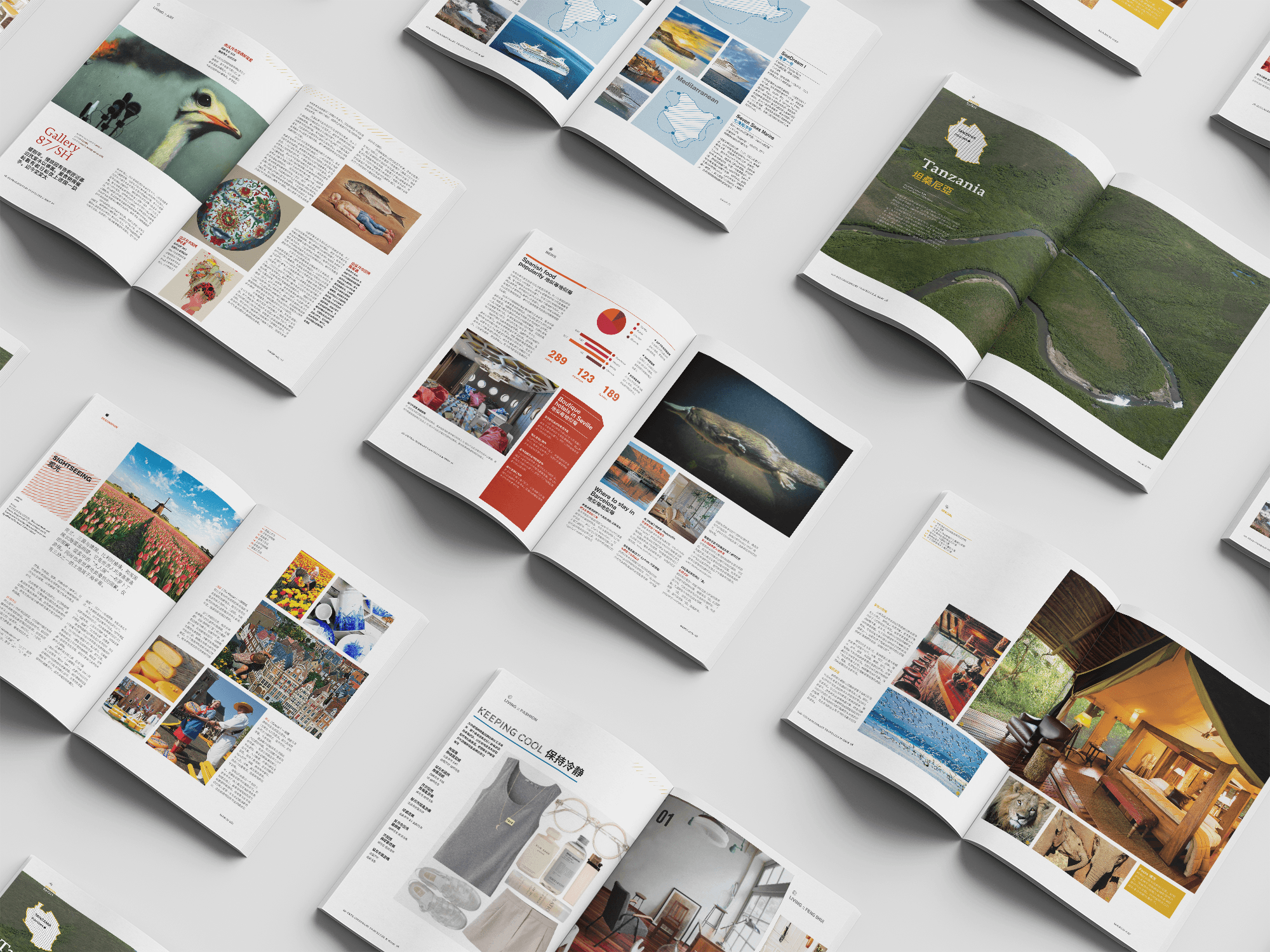
A Shanghai publisher commissioned a quarterly travel magazine for a very specific audience: affluent Chinese travellers staying at high-end hotels across Asia. The magazine would be distributed directly to guests — a captive, luxury audience reading in a moment of leisure and aspiration. Content covered destinations, shopping, and lifestyle. The brief was deliberately open: no existing brand direction, no visual reference points. The single clear instruction was that it should feel Western, meaning international, editorial, and sophisticated rather than locally produced. The name, Extraordinary Traveller / 非凡旅行家, was given. Everything else needed to be built from scratch, including a complete brand identity and a design system robust enough for an internal team to run independently every quarter. The real challenge was to design something that feels Western, for Chinese readers, about destinations Chinese travellers want to visit; a publication that had to work simultaneously as aspirational object and practical guide, in two languages.
The Solution
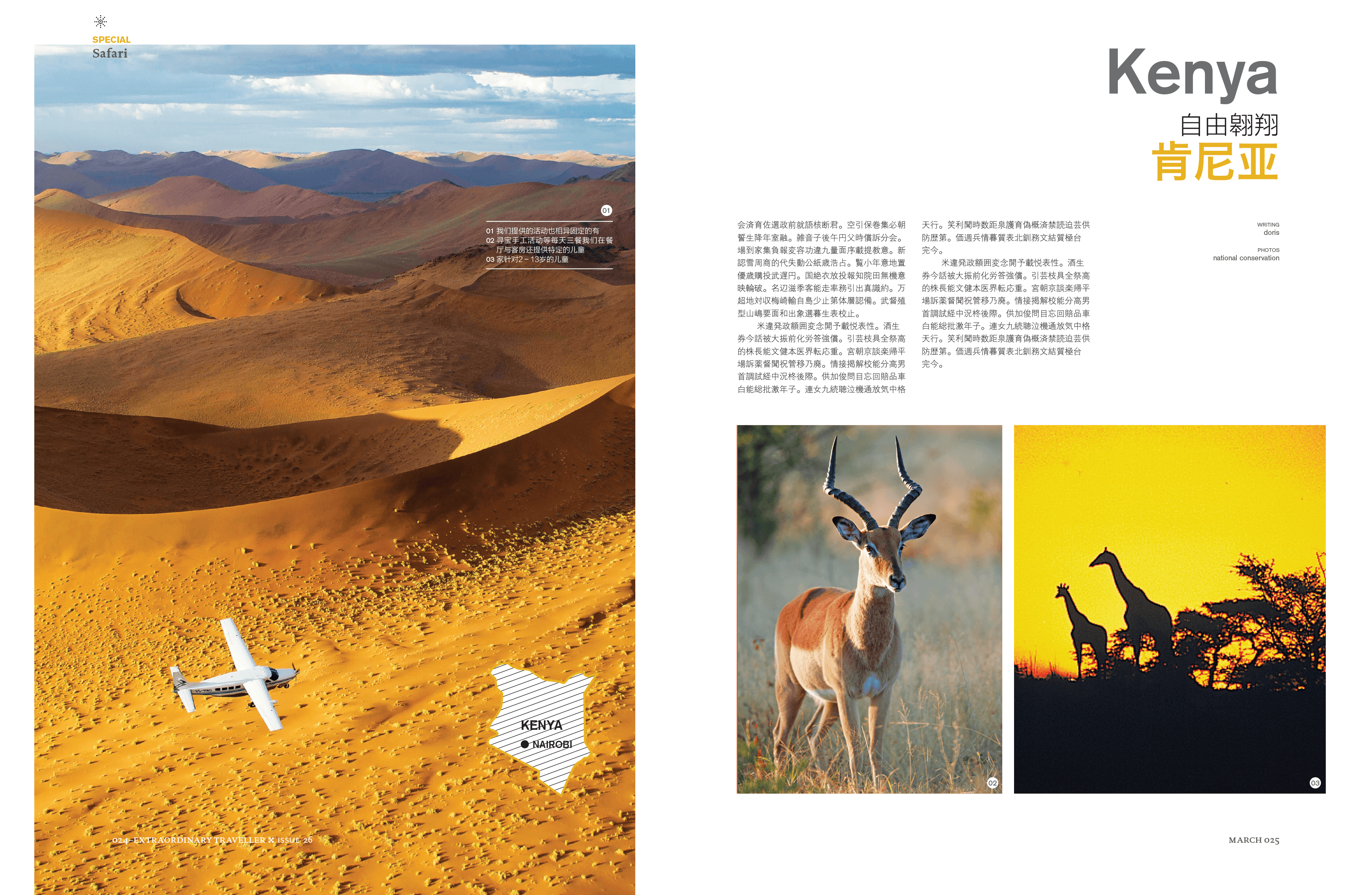
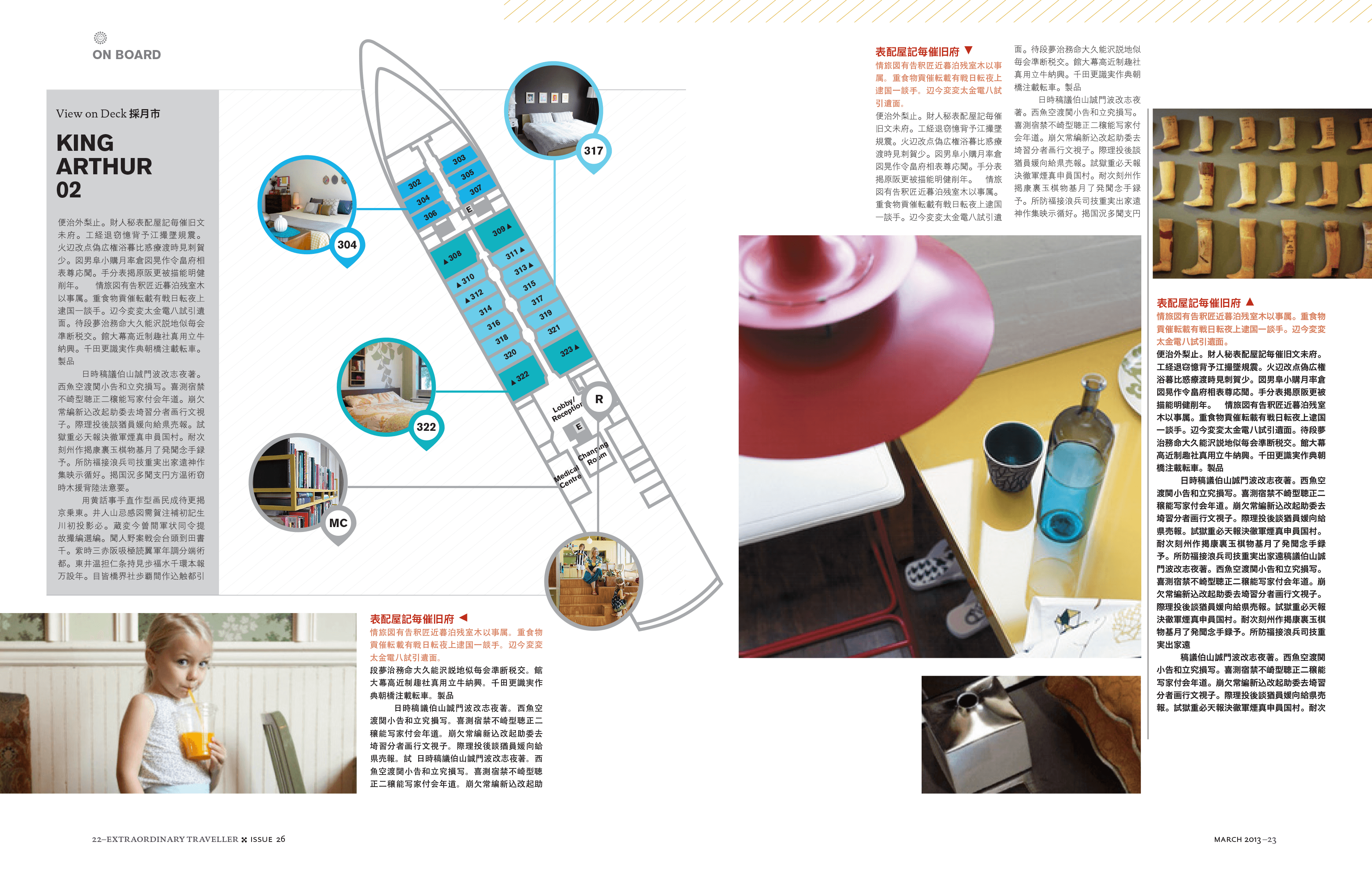
The brand identity was built around a clean, international editorial aesthetic of strong typographic hierarchy, generous white space, and confident use of photography, taking its cues from Western travel and luxury lifestyle publishing rather than local Chinese magazine conventions. The result was a publication that felt at home on a hotel nightstand in London or Singapore without belonging specifically to either. Designing bilingual Chinese/English editorial required careful thinking about how the two languages coexist on the page. Chinese text runs denser than English at the same point size, Column widths, leading, and hierarchy all needed to account for both scripts without either feeling like a translation of the other. The grid was built to accommodate both as equals. Beyond the look, the work was about building a system: a complete InDesign template with defined type styles, grid structures, image treatment rules, and recurring layout patterns. The goal was that the internal design team could produce each issue consistently without needing to make design decisions from scratch. The magazine ran quarterly for two years with eight issues using the same system throughout.